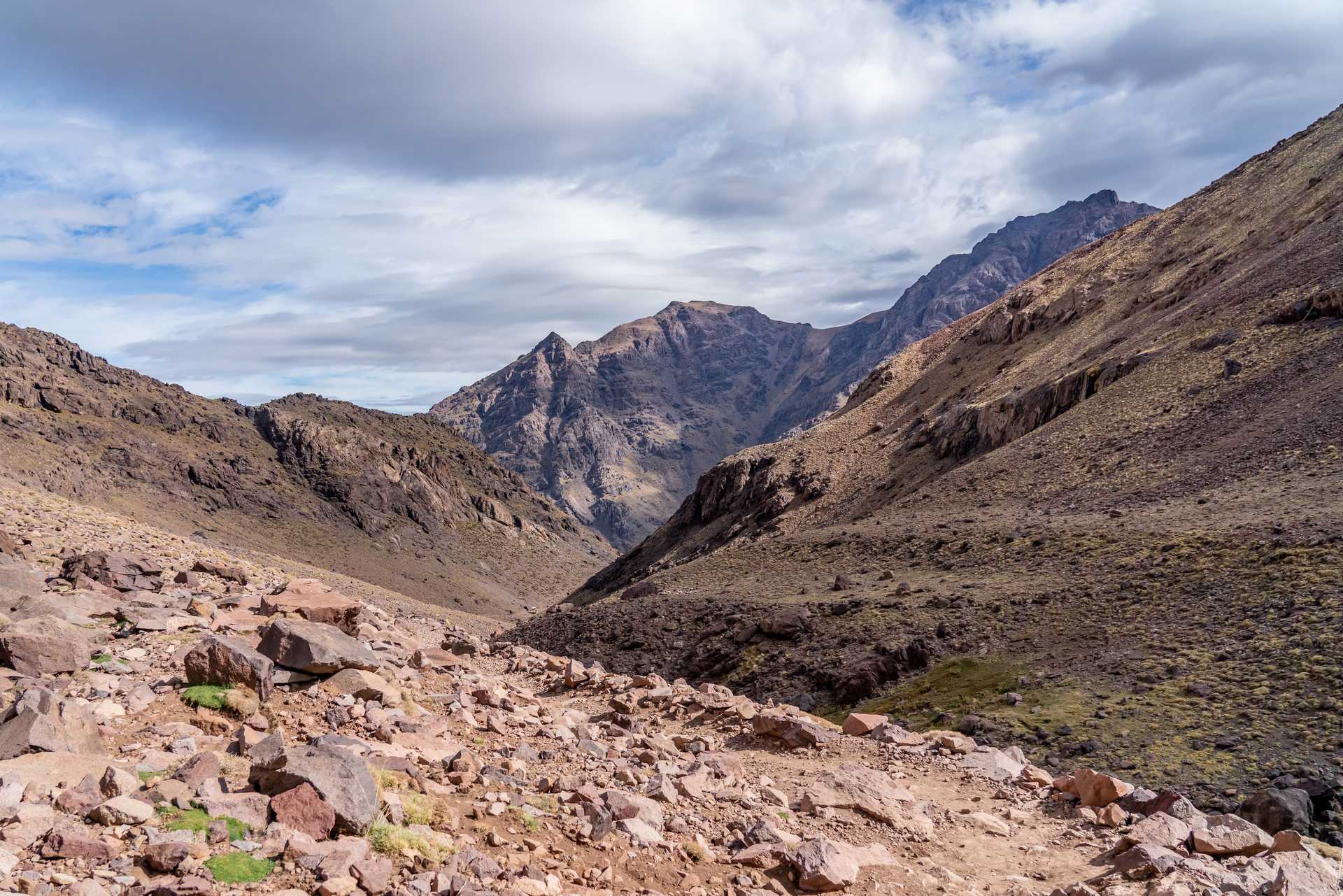
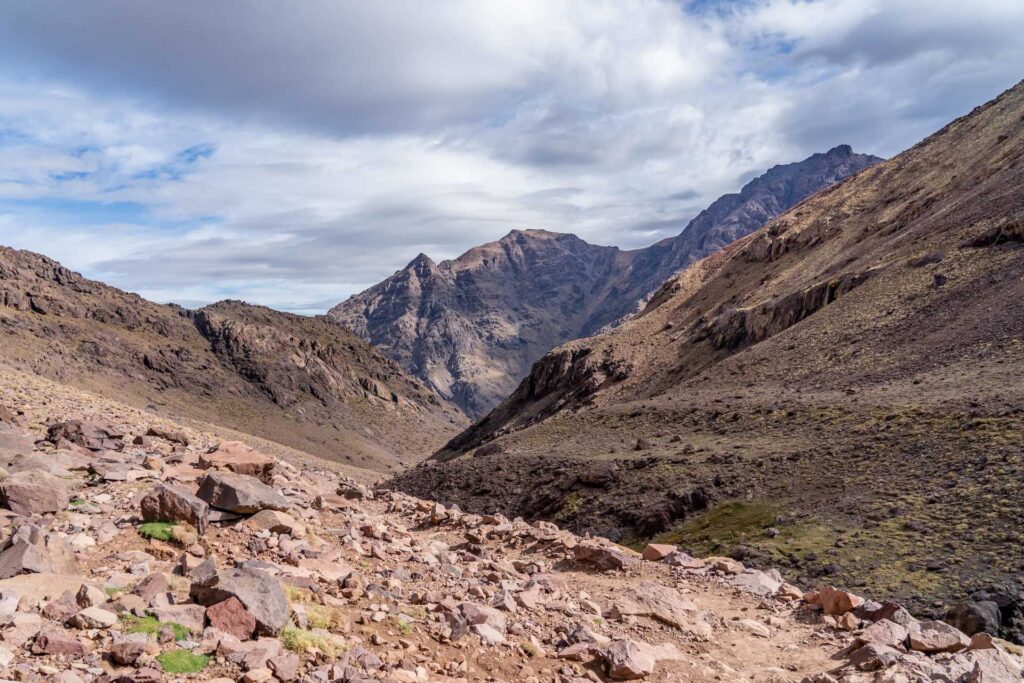
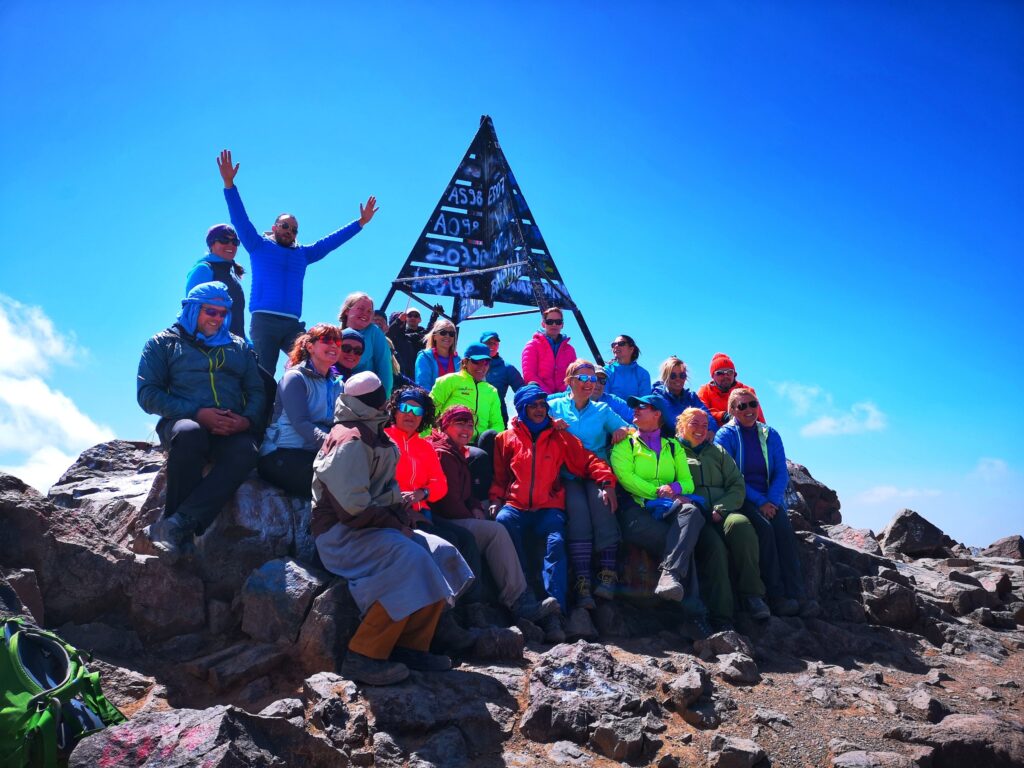
At 4167 m (13,671 ft), Mount Toubkal is the highest peak in North Africa and the most popular trek in Morocco. It is only a couple of hours from Marrakech, it does not require technical climbing skills, and the view from the summit over the High Atlas is unforgettable. Here is our local guides’ complete guide to the Toubkal trek.
Where Is Mount Toubkal?
Toubkal is located in the Toubkal National Park in the High Atlas Mountains, about 65 km south of Marrakech. Most treks start from the village of Imlil (1740 m), which is reached by road from Marrakech in around 1.5 hours.
How Hard Is the Toubkal Trek?
The classic route is a non-technical hike, but it should not be underestimated. The summit day starts early, the altitude is significant and the terrain is steep and rocky in places. With a good basic fitness level and some hiking experience, most people can reach the top. We grade our Toubkal treks as moderate to hard.
Popular Toubkal Routes
The Classic Route via Imlil (2–3 days)
From Imlil, the trail climbs through the Mizane Valley and the shrine of Sidi Chamharouch to the Toubkal refuge (around 3200 m). After a night at the refuge, you start early for the summit, then descend back to Imlil. Our Classic Toubkal Trek follows this route in 3 days from Marrakech.
The Berber Villages Circuit (5–6 days)
A longer trek lets you acclimatise better and discover the real High Atlas: remote Berber villages, the Tamsoult valley and high passes such as Agulzim. It ends with the summit of Toubkal. See our 6-day Climb Mount Toubkal trek.
Toubkal Combined With Other Adventures
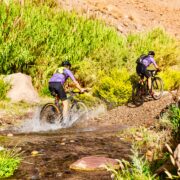
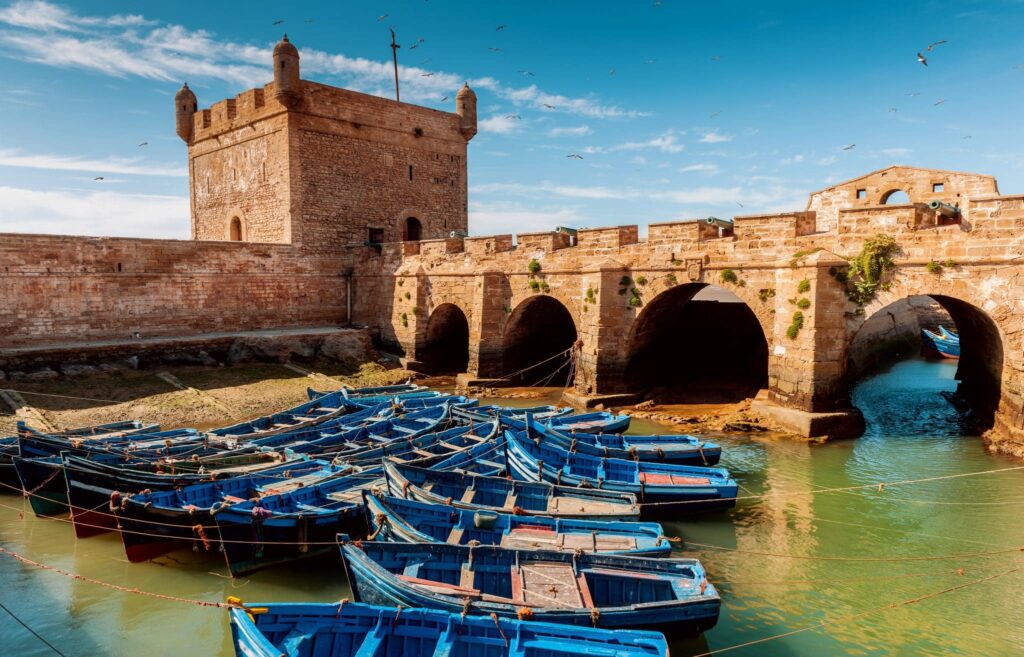
Toubkal also combines perfectly with a relaxing stay by the ocean on our Toubkal Trek and Essaouira trip, or with cycling in the Agafay Desert on our Hike and Bike: Toubkal and the Agafay Desert tour.
Best Time to Climb Toubkal
- April to June and September to October: the best months, with mild temperatures and usually stable weather.
- July and August: warm in the valleys and busier on the trail, but the summit is usually free of snow.
- November to March: winter conditions with snow and ice – the ascent then requires crampons, an ice axe and winter experience.
What to Pack for the Toubkal Trek
- Comfortable, broken-in hiking boots
- Warm layers, a fleece and a windproof/waterproof jacket
- Hat, gloves and a buff for the summit morning
- Sunglasses, sun hat and sunscreen
- Headlamp for the early summit start
- Trekking poles (very useful on the descent)
- Water bottle and some snacks
On our guided treks, mules carry your main luggage, and our team provides meals and mineral water, so you only carry a small day pack.
Do You Need a Guide to Climb Toubkal?
Hiring a licensed mountain guide is strongly recommended for safety – and in practice, trekkers in the Toubkal National Park are expected to be accompanied by an official guide. A local guide also helps you manage the pace and altitude, finds the best route in changing conditions and shares the culture and history of the Berber villages along the way. Our founder, Marouane, trained at the mountain guide school (CFAMM) in the Bougmez Valley, and our team has walked these trails for years.
Tips for a Successful Summit
- Walk slowly and steadily – “shwiya shwiya” (little by little), as the Berbers say.
- Drink plenty of water and eat well, even if you are not hungry at altitude.
- Choose a longer itinerary if you want better acclimatisation.
- Listen to your guide: the weather in the mountains can change quickly.
Book Your Toubkal Trek
Ready to stand on the roof of North Africa? Browse all our trekking tours in Morocco or contact our local team to plan a private Toubkal trek on your dates.